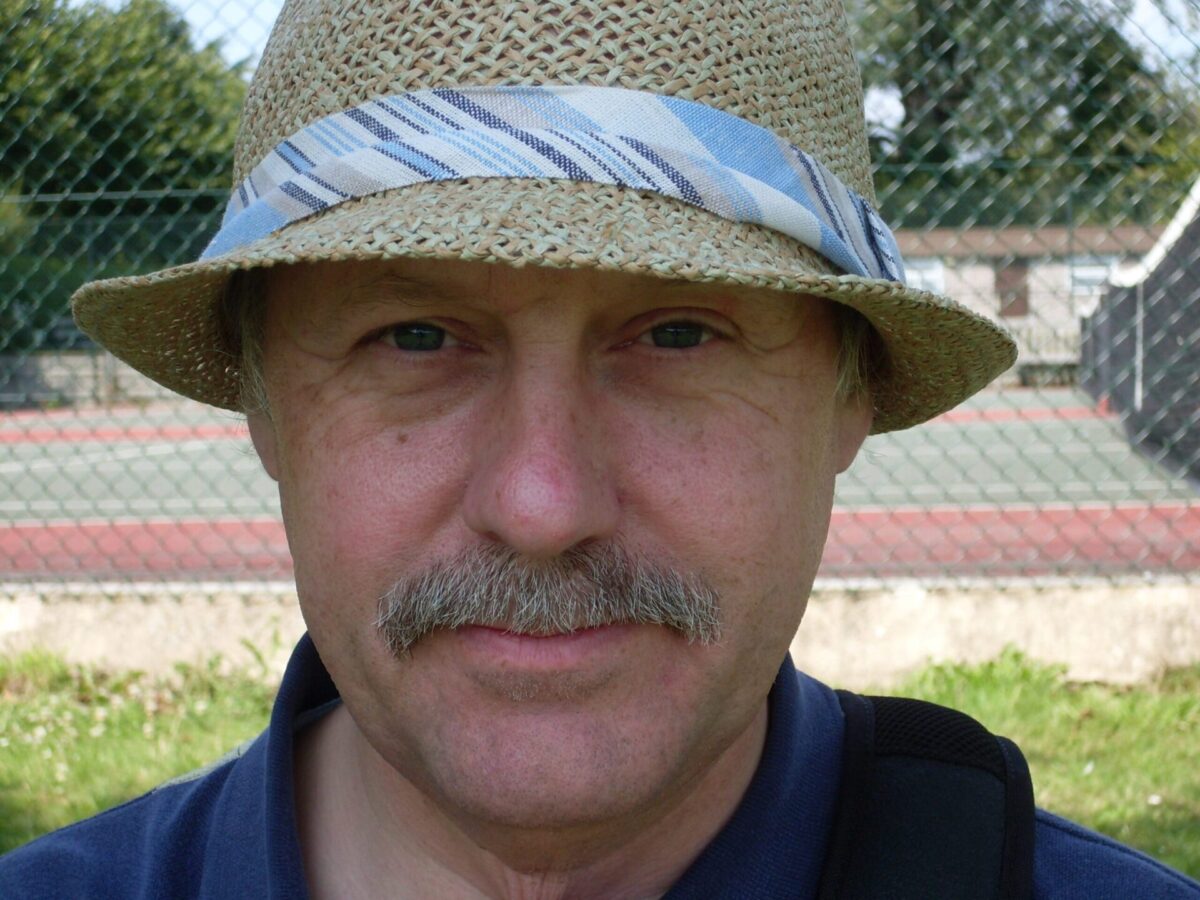
Background and History
I have been retired for the last 3 years having left my last job as a software developer in March 2023, but before that I also worked in Electronics, having been employed at the Marconi Instruments factory in both St Albans and Stevenage before leaving in 2001. I also have experience in DIY, having maintained our family homes since I first moved away from my parent's house in the 1980s.
As well as electronics and software development, another great passion of mine has been photography which I've been interested in since I was a boy.
Software Development and Computing
My background in software development came from both projects I carried out at work and also as a result of courses I took as part of an Open University degree which I completed in 1995.
Marconi Instruments
The first of the work projects was focused around fault reporting on the manufacturing line when I was Test Manager at Marconi Instruments. As part of the technician's daily job it was important that any faults found on equipment were accurately recorded so that any regular occurrences of the same fault could be analysed to see if there was a design issue that could be engineered away. This fault recording was all done on paper test records, which then had to be collated and analysed manually - remember this was the 1990s.
At this time we were starting to get computers on the shop floor which controlled many of the test rigs for the larger volume products, so along with one of the senior technicians I put together a system of recording the faults electronically and feeding them into a database to make the process easier. We produced a small TSR program (Terminate and Stay Resident - a program that could be run on DOS and be switched in and out of memory with a simple keystroke) which the technician could open up and fill in a form, and then when they had finished, the program would communicate via a serial line to a computer that sat in the office and ran Dataease which was a desktop database system. I remember spending several days running serial cable all over the shop floor to connect each of the computers together and linked to the office machine. That system was my first introduction to database querying which was made more difficult by the company insisting that I use Dataease which was a horrible program to interact with as I remember.

At the same time that I was learning about Perl and Apache at work, I was also studying for an Open University degree, so I was being introduced to C and a language called Prolog and also took a course called, Databases and Database management, that showed me how relational databases worked and introduced me to SQL.
Kerry Ultrasonics
I left Marconi Instruments in 2001 having been a victim of the 6th round of redundancies since 2000, and started at a company called Kerry Ultrasonics in Hitchin. Kerry was completely different from Marconi, and my role moved away from the kind of electronic test and instrumentation work I had previously been doing and into a supervisory role with the test department of an Ultrasonic Cleaner manufacturer. I still managed to get some software involvement in that job however by designing a Java Swing desktop application that could be used to simulate the operation of one of the pieces of machinery that the company sold.
My stay at Kerry Ultrasonics was quite short and I joined a company called ProTalk in 2002 as a proper software developer - my first job in that field.
ProTalk
ProTalk was a start up that was involved in the dot com boom. The business was all on-line and involved taking press releases from companies and publishing them on websites dedicated to particular business segments and then selling a sales lead service which the companies that were producing the press releases could sign up for. Looking back it's the sort of business that could only work at the very start of the Internet, because within a few years each company would have their own website and wouldn't use a third party to publicise their products and releases.
My role at ProTalk was to take the existing system which had been developed by the company founder and convert it into a central streamlined editing system, as well as administering and maintaining the websites.
The system being used was based around a desktop database system (I can't actually remember which one it was) and this system had basically been duplicated for each of the 7 or 8 sites that were running. This led to massive amounts of duplication with companies that were present in say, 4 of the disciplines that the sites covered being entered into each of the 4 separate copies of the database and then being maintained by 4 separate editors who would add their own interactions with the company to their own copy of the database. Also, all the software that had been written and deployed to the main website was not under any form of version control - backup consisted of tarring up the directory tree and saving it to another directory.
I had to pull all that different data together into a central database (MySql) and then write an editorial system that could allow each of the editors to write their own articles and publish a newsletter each week. After my experience with Java from my previous job, I designed and wrote a Java Swing application that allowed each editor to remotely edit the articles and interact with another Java application that ran on the central server to publish the articles. Today, the whole system would have been written to run on an http server, but at the time Java seemed the best solution.
Alexanderstreet Press
I left ProTalk when it was bought by a large publishing company in London and moved to an American company called Alexanderstreet Press where I got my first job in a company where I was part of a proper software development team that followed proper software development practices. Alexanderstreet was the first company I'd worked for where you were expected to write a test suite for the code you had written.
It was during my time at Alexanderstreet that I had my first taste of python, working on the backend for a video streaming application which was deployed to the cloud on AWS. I also used a non-relational database for the first time, discovering the joys of dynamodb and finding out that the only reason non-sql databases are so fast is because you design them for the queries you are going to run on them and they are not a universal database system that you can throw data into and pull out at will.
When I left Alexanderstreet (which by then had been bought twice and was then owned by a company called Clarivate), I was the longest serving member of the development team, having been with the company for 11 years.
WordPress and blogging
I started using WordPress whilst I was at ProTalk, when I added a blog to each of the individual websites that ProTalk ran, used by the editors to have interaction with people and keep the websites linked to other sites. Because I had some experience, when I started my own sites, WordPress was a natural place to start.
I started a personal blog at WordPress.com (which was the forerunner of this site and some of the earliest articles were originally written on that WordPress.com site) which started as just personal views on products we had bought in the house or photos I'd taken that I particularly liked. Because WordPress.com has its own eco system of comments and followers I quickly gained a following and started regularly posting articles.
After a time I also began to be interested in vintage film cameras. Well, I'd always been interested in photography and cameras, but I discovered one Sunday afternoon whilst browsing eBay, that it was possible to buy cameras that I'd seen as a teenager in the photography magazines and couldn't afford for only a few pounds. This started the collection bug with me which began as a couple of cameras in my bedside cabinet, and grew to become over 100 stored in different locations about the house.
Once I had the cameras, and I'd started blogging, I suppose it became natural that I started writing articles about the vintage cameras I'd been collecting. Initially I just had a section of the site that dealt with the small number of vintage cameras I'd acquired, but after a while I had so many vintage camera articles that I started to categorize them by manufacturer. After a while, I started buying cameras that didn't fully work, and so I started to investigate how to repair the cameras and that lead to articles about the different repairs I'd undertaken.
At the time I started to produce more articles about vintage cameras, I also moved the site from WordPress.com to a self hosted site using a digital ocean droplet rather than use the WordPress.com managed site. The reasons for this were mostly cost, but also because on WordPress.com I couldn't write my own code in the form of plugins for WordPress, and I wanted to do that for another idea I'd had to enhance the site which I'll explain next.
A side product of buying vintage cameras is that occasionally I would buy one that still had a film in it. This interested me and I wanted to find out what lost photos had been left in the cameras, so I started to develop the films and publish the photos I found on my site. Eventually, this led to me starting to buy boxes of colour slides from eBay which came from house clearances to find if there were any interesting images in these old collections. Eventually, I decided that these photos deserved their own site and I created another WordPress site called found-film.co.uk where I published these photos.
It was a short step from there to starting to buy vintage 8mm home movies from eBay and digitizing and publishing any interesting films I discovered. This was to another WordPress site I set up called vintage-home-movies.co.uk.
About 3 years ago, with an eye to my upcoming retirement, I decided to amalgamate the vintage camera articles along with the found film images and the vintage home movies onto a new domain called everythingvintage.uk, which is where they all live today. Although that site was also set up as a WordPress site, it has recently been moved to a static site using Astro which results in far better performance, and much lower running costs.
Computing
I've been interested in computers since my early 20s when the home computing craze started. I bought an Atari 400 on advice from a friend at work and spent many hours copying programs from magazines into the computer to try out a new game or utility program. At the time it was quite common for programs to basically consist of lots of peek and poke statements that were writing bit patterns into memory at certain locations in the computer memory map and if you got a single character wrong the most likely result would be a memory corruption and the system would hang. Many people, myself included would spend hours typing lines of numbers into the console and, desperate to find how it worked would hit run before saving it - a fatal mistake if you hadn't been completely accurate.
After the Atari 400, my next computer was a self built unit with component bought from Watford Electronics in Watford. A friend and I drove over to Watford from Stevenage and bought all the components necessary to put together an IBM PC. I remember Steve, my friend bought a 486DX2 motherboard and I bought a 386SX motherboard. The 486DX2 was a better processor because it had clock doubling and ran at 66MHz and also had a floating point unit built in. My 386SX was a cut down processor that ran slower and didn't have floating point.
It took us the rest of the day when we got back home to put the units together and I can still remember the joy of seeing the screen light up when I'd got it all connected and inserted the DOS floppy disk for it to boot from. The machine had no hard drive, 1MB of RAM (I seem to remember DOS could only use 640kB or so of memory) and had a CGA graphics card so could display two colours on a 640 x 200 display.
From those early days I have now moved on to running a small Proxmox cluster of Lenovo ThinkCentre tiny computers which provide virtual machines and Linux containers for all the services I run locally which are
- Emby media server
- Immich Photo server
- Home Assistant home automation server
- Nginx Proxy Manager
- A local Statistics site driven by Google Analytics to provide stats for this blog and everythingvintage
- A local site to track the status of the telecine machine I built to digitise 8mm home movies
- A PiHole local DNS server for local hostnames
- Various other local services
Photography
My experience in Photography goes all the way back to when I was a boy and gained an interest because my Dad was a keen amateur photographer.
First Cameras
The very first camera I owned was given to me as a Christmas present in the mid 1960s when I was about 8 years old. It was a Kodak model in white plastic and although I don't remember the model, looking on eBay tells me it was probably a Kodak autosnap. I know it took roll film, probably 127 format, and had very few controls as such. I basically had to set a number on the lens (f-stop) to match the weather of the day.
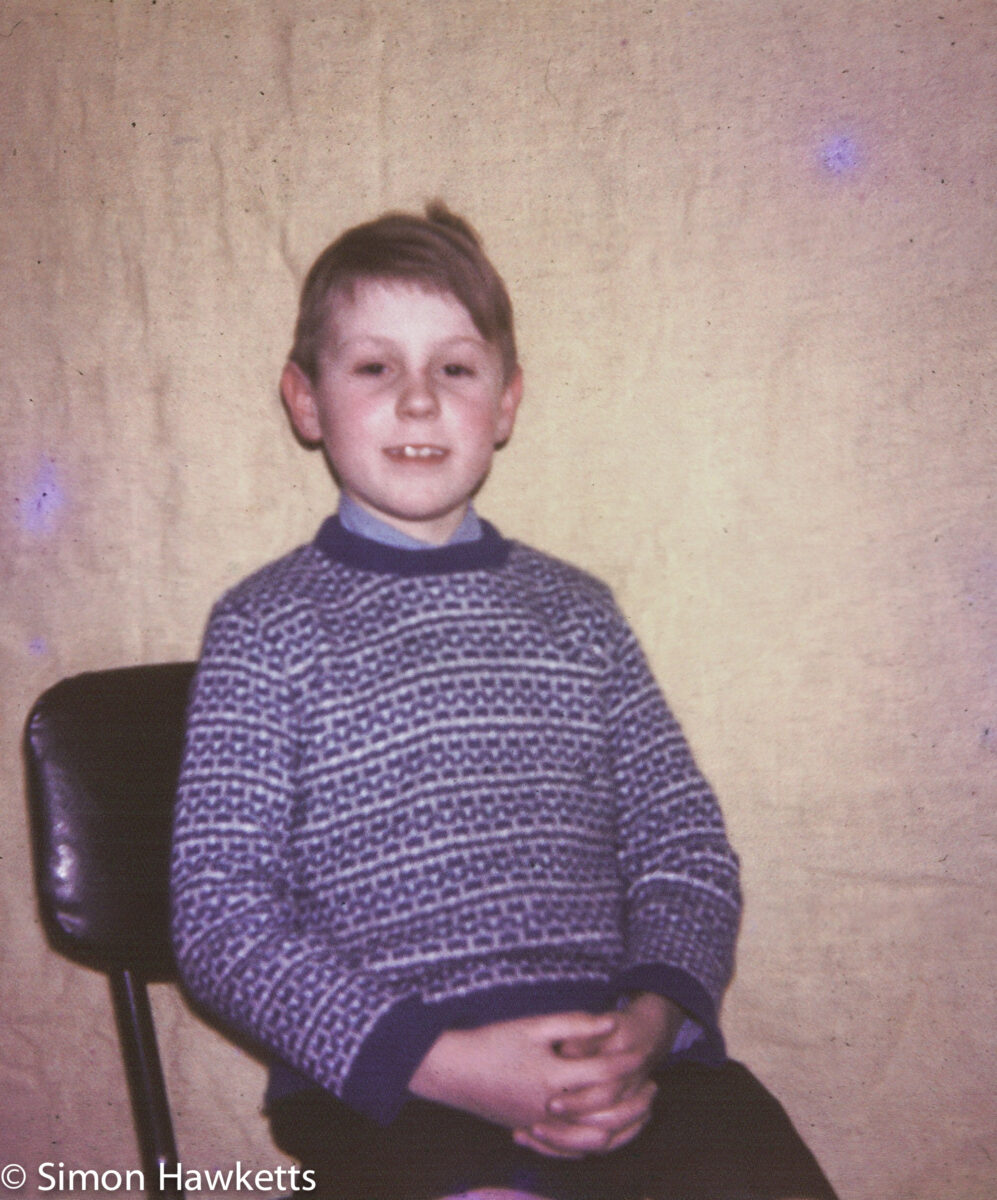
Although I don't now remember which photos I took with that camera, I still have some family photos and negatives that are of other members of the family so they were probably taken by me on that camera.
I remember the same Christmas being given a home contact printing kit which consisted of a set of sample negatives, a box of photographic paper, a small perspex frame that allowed you to place a piece of photographic paper in and the negative on top and then close the frame to hold everything steady. There were also some bottles of chemicals - developer and fixer.
I remember being very excited about receiving this gift and couldn't wait to get printing some photos. Dad blacked out the bathroom for me with a blanket and set up a red light (probably replaced the light bulb with a red bulb) and I remember assembling a negative with some paper and then running into the bedroom to expose the little perspex frame to the light. I was even more excited when I placed the paper in the developer and watched the image appear before my eyes.
By the time I was a teenager I'd outgrown the little Kodak camera, and I was hankering for a 'proper' camera and managed to acquire a Zenith B, 35mm SLR camera. I'm not sure now where I got it but probably from my Dad who was a bit of a collector of vintage cameras (that's where I got if from). I used the Zenith for several years until I upgraded it to a Petri MF-1 which was actually not much of an upgrade, just a nicer looking camera.
One of the aspects of photography that is missing in today's digital, instant review world is the art of developing and printing your work and that was the part that I used to enjoy as much as actually taking a camera out and taking photos. We didn't have a big house and couldn't therefore have a dedicated darkroom, but Dad would put blankets over the windows in the Kitchen and set up a Boots enlarger on the Kitchen worktop, plastic trays of Developer, Water for a wash bath and Fixer and fix a Patterson's red photography lamp on the kitchen cabinets and we would have an evening printing our best negatives.
Later Good film cameras
After I started work at Marconi Instruments in St Albans I took a few trips into London to take some photos with my Petri MF-1, and soon decided that since I was now working and earning some money I would get myself a better camera. This would have been in the early 1980s and the model that caught my eye and would have been my ideal choice was the Olympus OM2. That was a fantastic camera and I drooled over the magazine adverts for it, but it was just too expensive for me to buy, so instead I bought one of the more amateur offerings from Olympus, the OM-20.
I used the Olympus OM-20 for many years and took lots of photos, mainly in the form of colour slides. I remember that somebody who worked in the main stores at Marconi Instruments ran a photography club or group and could bulk buy Orwo colour slide film and would sell it to anyone who was interested. I bought lots of rolls of Orwo from him, but I always found it very tricky to get the exposure right. At least, that had been my experience with my Petri, but I seem to remember that the Olympus used to give me good exposures every time, unless I did something silly like shoot snow and not use the exposure compensation to allow for the metering errors with an all white subject.
There came a time when I decided I would like an autofocus camera and I traded the Olympus OM-20 in for a Canon EOS 300 with a 28-80mm standard kit lens. That also gave very good results but I always regretted trading in the OM-20 and for many years wish I'd kept it. (I later bought a vintage OM-20 in nearly new condition but it was never quite the same as having my original camera back.)
Digital Cameras
When our first child was born in 2002 we decided that film was going to be too expensive to use to take family photos with so I bought my first digital camera a Panasonic Lumix FZ8. I seem to remember buying it just after he was born, but an internet search tells me that it wasn't sold until about 2006, so I must have bought it after he started school. That may be right because by that time we also had my Daughter, so I probably got it for both of them.
The Panasonic was a good snapshot camera, and it helped me to understand something fundamental about photography that I thought I understood but it turned out I didn't. I remember walking round my mother-in-law's garden in Loughborough taking photos of flowers and was surprised that the flower head wasn't isolated from the background. I had learnt very early on with my Petri, that if you open up the lens to the largest aperture available it would make the background of the photo out of focus. To my amazement however this didn't work with the Panasonic - or at least it did work but not to the extent I'd expected. It was then that I learnt that the f number by itself doesn't determine how much subject isolation you get - the focal length of the lens and sensor size also matter.
Whilst the children were growing up, I didn't really get involved with photography other than taking family snapshots and holiday photos. It was about 2010 when I started to think again about buying a serious digital camera, and having always been a fan of Pentax I bought a Pentax K-200 Digital SLR. I also bought a series of lenses to go with it over the next few months and years and that then became the basis of my photography for the next few years.
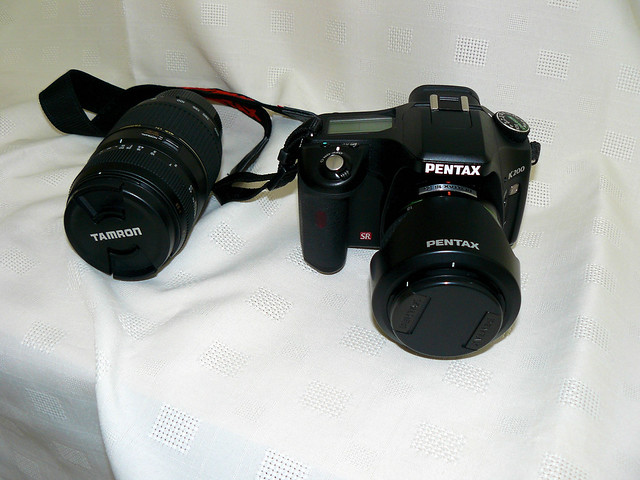
One subject area that started to interest me more and more at this time was macrophotography. I'd never really been interested in taking photos of insects and spiders when I was a teenager, and it was considerably harder to do on film where a fast colour film might be ASA 400 which really limited the shutter speeds and therefore how well you could freeze action. Because of this interest I bought a Tamron 70-300 zoom telephoto lens with a macro setting, which I could use to take photos of butterflies and other insects. In fact, because I could use the macro setting at the 300mm end of the lens, I could actually stand a reasonable distance away from the insect and get some good shots. They weren't true macro, i.e. 1:1, but they were still interesting and were certainly fun to take.
As with all things I eventually got the upgrade bug and swapped the Pentax K200 for a Pentax K-r, and then after another 18 months or so I swapped the Pentax K-r, and an Olympus E-PL1 which I'd bought and another camera which I can't now remember for a Pentax K-5 DSLR which was the last DSLR I bought (well, actually that's not completely true - just this year I bought a second hand Canon 5d Mk II just so I could say I'd tried a full frame DSLR).
I loved the K5 and used it for a long time, buying a 90mm Tamron macro lens for it as well as a Tamron 10-24mm super wide angle. In the end however I got fed up with the screw thread autofocus system and moved to a mirrorless camera system by buying a Sony NEX 6. I still have the Pentax K5 officially, although it's on permanent loan to my Son who lives in Norwich now.
The Sony NEX6 was also a fantastic camera and I used it a lot with vintage lenses. This was the time I was particularly interested in vintage cameras and lenses and the NEX series was fantastic for having very cheap lens mount adapters meaning I could try out many different vintage lenses on the digital Sony body. I remember taking it on holiday to York one year and using it exclusively with a small kit of vintage prime lenses I had acquired from either different cameras I'd bought or in some cases lenses I'd purchased on eBay in their own right.
Just after I got the Sony NEX6 I made another slightly strange purchase.
I found a shop on eBay that was selling the Ricoh GXR camera system for a knock down price, along with some lens units. Now the Ricoh GXR was a unique camera that I'd been interested in since it first came out in 2009. It was unique because it was a camera body that took not just replacement lenses, but whole replacement lens/sensor modules. This meant it could be a snapshot camera with a small sensor, high zoom lens unit one minute, or a APS-C sensor camera with a 50mm macro lens the next, followed by an APS-C camera with a 28mm Wide angle sensor straight after.
Over the course of the next few months I purchased the GXR body along with the P10 sensor, the S10, the 50mm APS-C unit and the 28mm APS-C unit. A bit later I also bought the Leica mount APS-C sensor and the vf-2 viewfinder for the system. In the end I paid about £450 for the complete kit, but that was actually an investment because today it would probably cost upwards of £1500 - £2000 to replace them.
My final shift in camera manufacturers was to buy a Fuji X-T1 in 2016, and I've now settled on that system buying several Fuji x-mount prime lenses along with an X-t4 in 2024.
DIY projects and Electronics
Electronics
Like so many things in this short biography I find myself writing that my interest in this subject came from my Dad, but he obviously influenced me greatly. He was interested in electronics and wireless from an early age, and during his national service took a course in radio engineering and passed at the top of his class. I remember as a reward for this he was given a short flight around the RAF base he was stationed at, RAF Lynham in Wiltshire.
As a boy I spent many hours in his workshop with him and I remember bringing a small battery, bulb and switch into the living room one evening and carefully explaining to my Mum how the circuit worked.
I also remember there was a shop in Fakenham where we lived called Dugdales where Dad used to buy components and was friendly with the repair technician. He introduced me to the staff and I used to call in regularly to see what equipment they had taken in as part exchange for new sets. They would then sell me items for whatever price they had given in part exchange - in many cases they had just taken away the old set from their customer's house because it was no longer needed so I could basically have it for free.
I used to pick up old radios from Dugdales, get Dad to take it home in the car and then try to repair any faults. In this way I learned a lot about radios and how to repair them.
Eventually I moved on to Televisions and used to get Dad to bring back old TVs from the 1960s and get those working as well. I remember one day there was one of the original colour TVs in the back of the workshop and was amazed when the staff said it wasn't needed, had no value and I could have it if I wanted it. After a bit of negotiation with Dad, when I promised to get rid of all the other old set I had lying around in his workshop, he let me have it and I spent many happy hours setting the purity and convergence until it gave quite a reasonable, although not very bright picture.
Given my background hobby of electronics it's no surprise that after I finished school I took a course at N.O.R.C.A.T (The Norfolk college of arts and technology in Kings Lynn) in City and Guilds electronics, and then followed that up with a two year OND (Ordinary National Diploma) in Technology. This gave me the qualifications I needed to get a job in St Albans with Marconi Instruments.
I have written an article on this site about my first year or two at Marconi, so I won't repeat it here, but after spending a Year or so at the technician level I moved up the different levels until I became Test Supervisor of the Spectrum Analyser line in the mid 1980s. The product I was responsible for was a new product we had just introduced which was the most technically demanding of all the products we produced, the 2380 display unit along with the 2382 400Mhz Spectrum Analyser. This was followed a year or so later by the 2383 model, which covered a range up to 4.2 Ghz and was the first time I was involved in microwave electronics.
A year or so after the introduction of the 2383 we moved to proper microwave with the 2386 which covered a full 22Ghz range as I recall. They were very expensive beasts to buy and very difficult to manufacture and test.
My duties as test supervisor were mixed. As well as having a supervisory role over the technicians on the line, I also had to be on hand to help with any fault-finding that any member of the team was struggling with, so it was not only managing people but also kept a strong technical side as well. I think that was probably the job I've enjoyed most in my 50 odd year career.
As is often the case, in order to pay employees more they are promoted to positions where they don't necessarily want to go, and I was moved to the Quality Department when the Spectrum Analyser line was reduced to only a couple of units a month. It was from that position that I was made redundant in 2002.
DIY
It helped that my father had always been capable of doing most things round the house that needed doing, so I learned a lot of things from him. I remember him removing all the floorboards from the landing one weekend to add some extra lights in one of the downstairs rooms and that was when he explained to me how ring mains wiring works.
The projects I've undertaken over the last 50 years are numerous but to list just a few I have:
- Refitted the kitchen in both our old house, (which involved removing a half height brick wall and redesigning the layout) and the house we currently live in.
- Fitting out the utility room with plumbing for sink and washing machine in our first house and then twice in our current house.
- Replacing the radiators with more modern units which I've done in our current house.
- Fitting central heating to the upstairs of our first house when, oddly only the downstairs had radiators fitted.
- Fitted each of the bedrooms in our current house with fitted furniture.
- Painting, wallpapering and general decorating in both the houses we have lived in and my flat which I had before I was married.
- Removing a york stone fireplace which was in our current house when we moved in.
- Built a pergola in the garden from 4x4 and 8x2 wood.
- Built double thickness brick walls in the back garden to raise the level and level it off (the garden was sloped originally)
- Built a patio from blocks along with a 3 step pathway from the back yard to the top of the garden
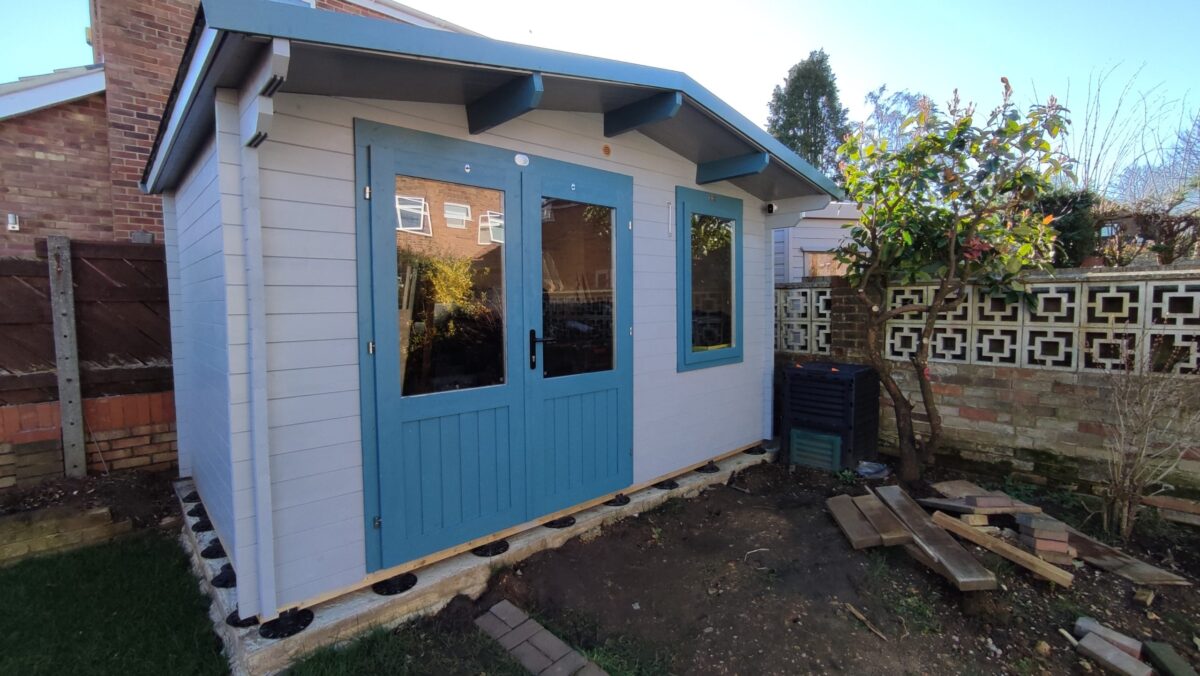
- Built a log cabin from a Dunster House kit in the garden as a workshop/retreat.
- Added numerous sockets and wiring when it was legal for me to do (before the Part P certificate was required for some work). For example, I rewired our Kitchen when I first fitted it out - interestingly when we had it refitted a few years ago by John Lewis, they reused the wiring I'd put in so it must have been reasonable.
- Redesigned and refitted our downstairs cloakroom
Other Interests and why I created this site
I also have numerous other interests.
For example, I learned to play the guitar when I was about 16 and had visions of being in a band. My cousin and I would practice for hours at a time and formed a band with a local drummer and used to hire the local village hall on a Friday night to play Beatles' songs. Although I virtually stopped playing when I started work, my cousin continued and to this day regularly gigs around Norfolk in a variety of different bands - how I wish I'd continued with the guitar. I can still play in the sense that I know the chord shapes and can still strum a song etc, but I wish I'd learned to play properly.
In a similar vein, I decided when I retired that I would learn to play the piano. This, again is something I have started at least 4 times in my life and not continued, but I think this time it's a bit different. For a start I have more time, and to be honest it only takes 20 minutes of my day. Also, I've started using an online tutor called Piano Marvel which has a 'streak' counter and it's just in my nature that once I've started that sort of thing I don't want to break it (I currently have over 1000 days on both duolingo and on my kindle) so I'm hopeful I will continue. The great thing about Piano Marvel is that it used the midi connection to the keyboard to make sure you are playing correctly, so this time I know I'm making progress.
I also spend 15 minutes a day on a site called SightreadingFactory.com which generates new music that you won't have seen before and again uses the midi connection to check your accuracy.
I use a 3D printer to construct parts for projects I'm working on or to replace items that break around the house. For example we have a Joseph Joseph bin in the utility, and its release catch broke a year or so after we bought it. I designed and 3D printed a part to fix that which has now been in operation for about 4 years. The 3D printer I use is now a Bambu Labs P1S, although I have also used a couple of other models before that. For design I use Onshape.
Other projects I'm currently working on which may result in articles on this site or everything vintage are a 10MHz function generator using a Raspberry Pi, a 5 inch touch display, an ESP32 micro controller and an AD9833 waveform generator, and a 3D-printed 90V/1.5V battery eliminator for vintage valve radios
As I said earlier I initially started this blog on WordPress to publish photographs I'd taken that I liked, but it's grown into much more than that. I use it to publish anything that I think may be of help to anyone else undertaking similar projects or with similar interests. Of course there are other articles that I wrote just to get things off my mind or to act as an aide memoire, but I think the most interesting articles are the ones where I've learned something that I can pass on, or more importantly I've made a mistake or found something wrong with the way I've done something and hope that I can help anyone else if they make the same mistake, or stop them making it.
Contact
I live in Stevenage in Hertfordshire and can be contacted by email and simon dot hawketts at gmail dot com