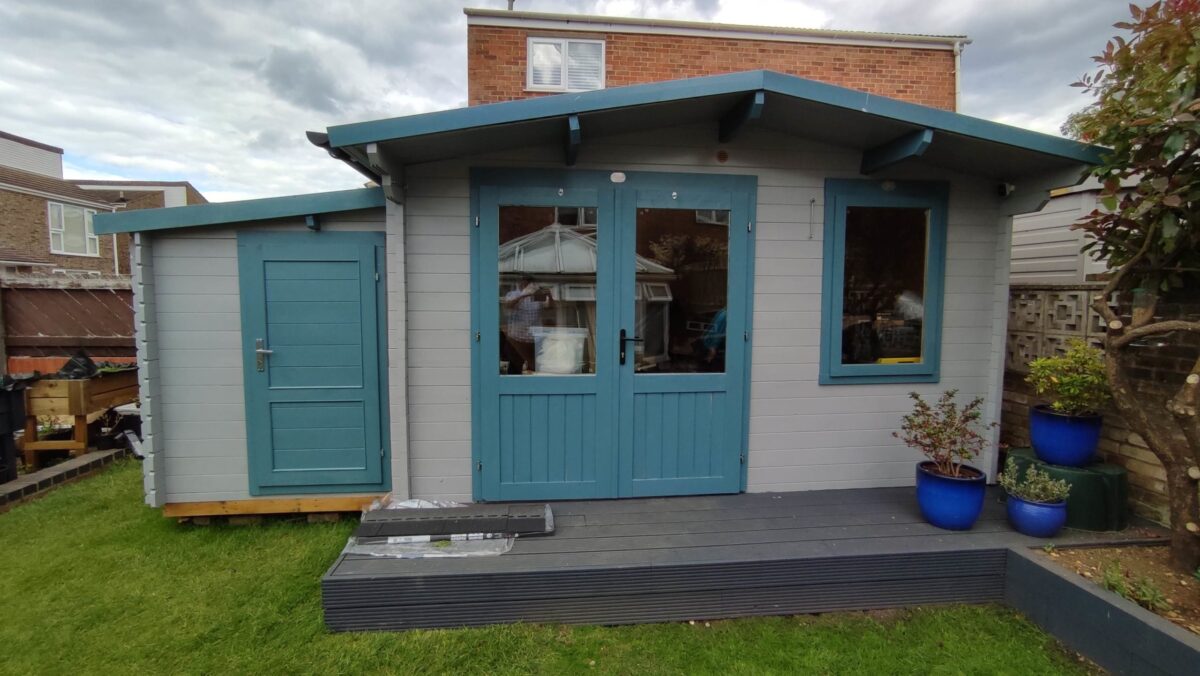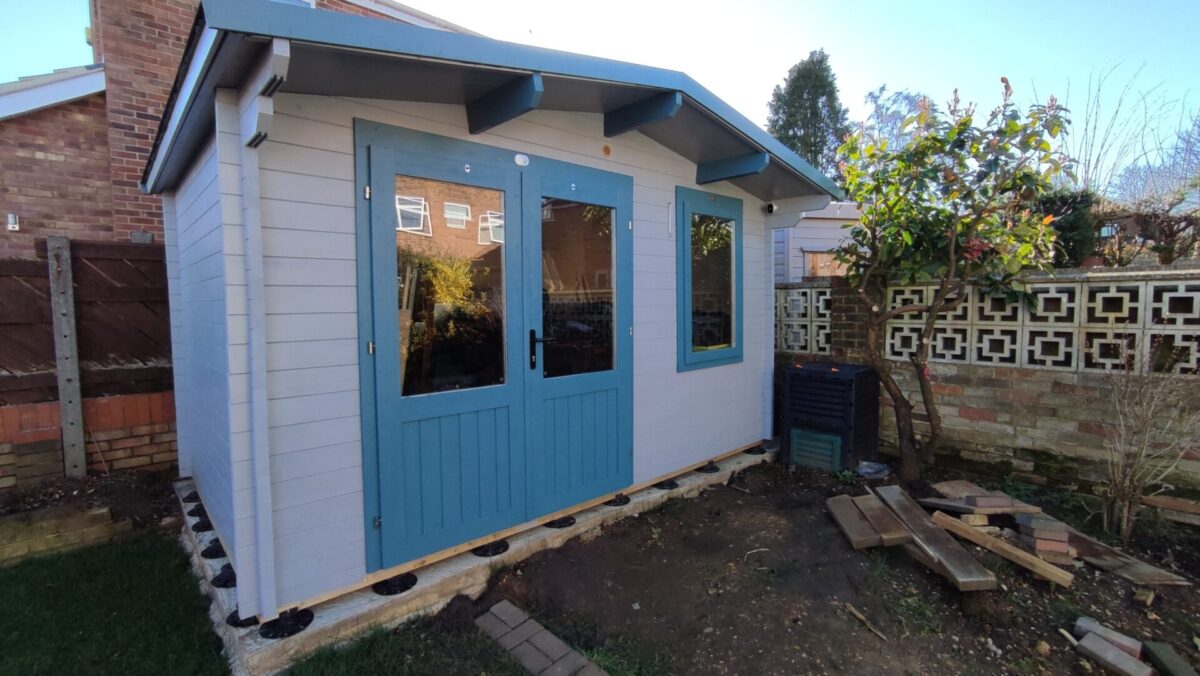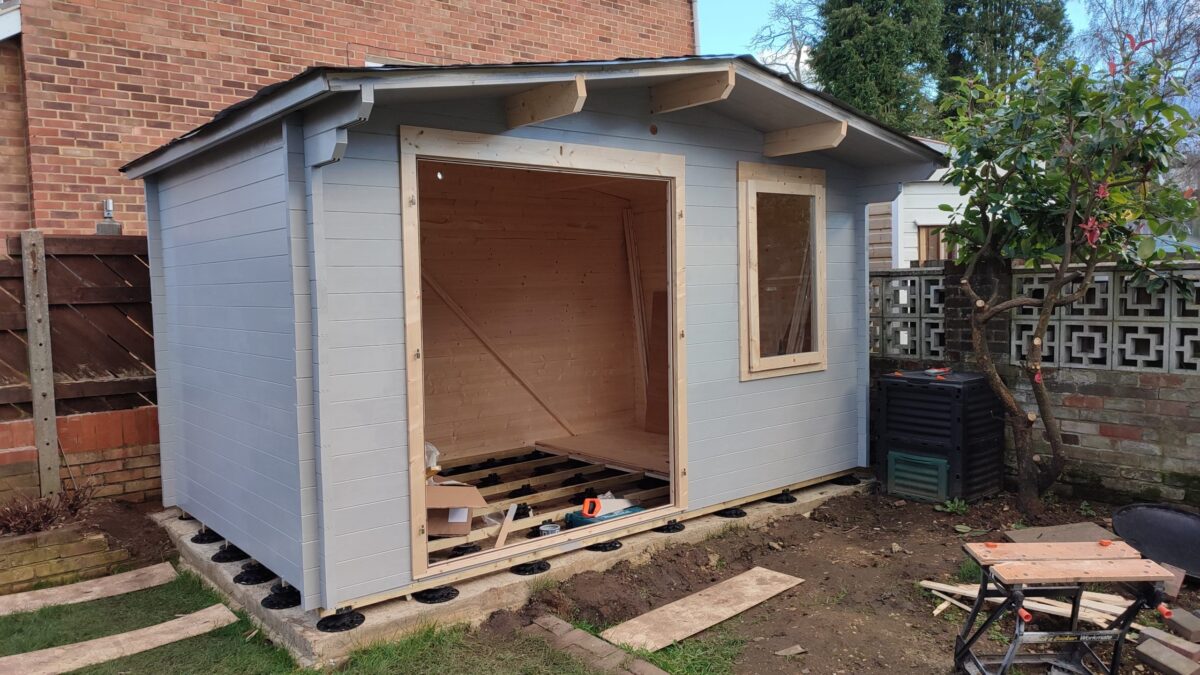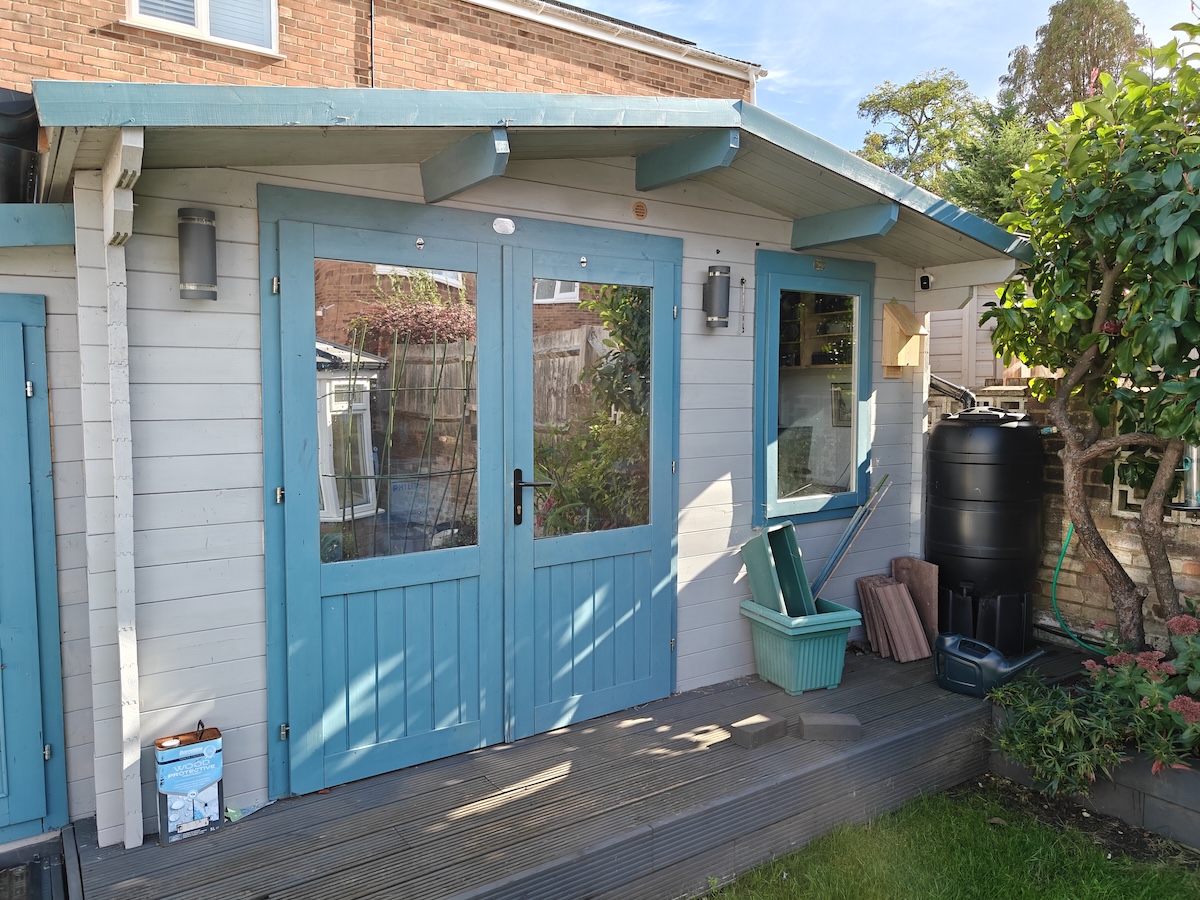
4 years ago, in January 2022, I built a Dunster House log cabin in our back garden, to use as a workshop, office, hobby room and general 'Man Cave' and in this article I want to reflect on how useful it has been, how well it has stood up to British weather, and my general feelings about whether the whole project has been worth it.
Recap on the Build of the Dunster House Log Cabin.
I wrote articles at the time about the build process so if you want to read in more detail about the whole story this link will take you to the first part of that series, I will give a brief recap here however.
I had cleared a corner of the garden where the cabin was going to be positioned several weeks before delivery and laid down a concrete base, although the base was not particularly flat. This meant that I was going to use some plastic supports designed for decking and similar under the base of the cabin to allow it to be completely level.
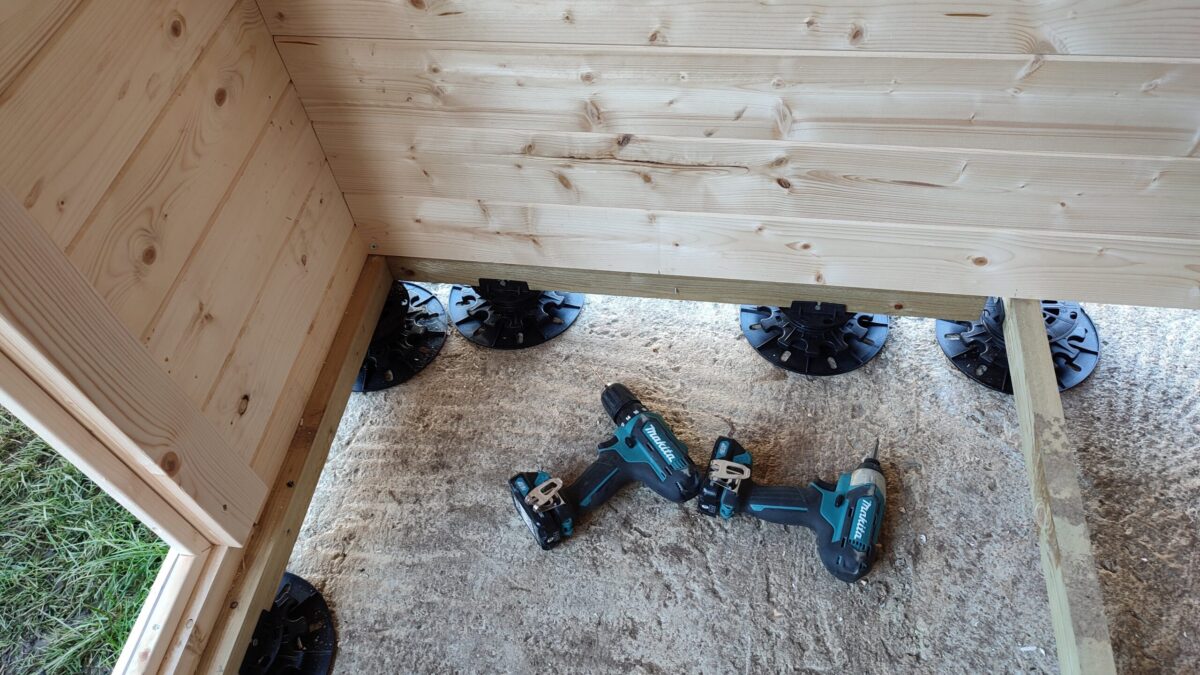
This led to my first problem, because after I had the shell of the cabin assembled, I found the floor supports were bending due to the weight pushing on the end of the supports. I overcame that issue by moving the supports to the edge of the building, but at the time I was concerned that they would support the weight properly.
The full build took about 5 days to have the shell assembled and the roof watertight, and then the internal fitting took another few weeks. Because of the cold weather and pressure of work, I didn't get the cabin fully fitted out with power until May 2022, some 4 months after I started the build. I had to have an electrician carry out that work to get a part P certificate, and I had him fit lights, 5 double sockets, another couple of sockets for desk lights and also add a network cable so that the cabin could also have a wi-fi access point.
Main use of the Log Cabin
The original reason I assembled the Log Cabin was for use as a workshop and as a study. Just before I bought it, we had converted our garage into a 'granny annexe' for my wife's Mother, so I lost the workbench I had in the garage, and I needed somewhere to store tools etc. When I built the log cabin, I made sure to add the insulation option because my intention was to use the cabin all year round if possible.
The cabin blows hot and cold
The first thing I can report, 4 years later, is that I never really was able to do that. Even with 2 inches of insulation in the roof and 2 inches in the floor, in the middle of winter it is just too cold to use the cabin. I had fitted an electric radiator with a wifi switch and the idea was I would be able to program that to come on a hour or so before I wanted to go out to the cabin, but then the energy cost went through the roof and it was just too expensive to turn the heating on for long periods of time. This last year we have had solar panels fitted, so I might find that situation changes this year.
In contrast, in the Summer months the cabin can get extremely hot. The insulation does help here and when the sun is high overhead the insulation tends to keep the cabin manageable, but when the sun is lower in the sky in the afternoon, the sunlight streams through the windows and raises the temperature a lot. I've measured the temperature at over 40C at mid afternoon.
Because of this, I've fitted reflective coating to the outside of the windows. This was quite reasonable from Amazon and is stuck on the glass using a water spray1. I initially didn't realise that you had to peel off a protective film from the reflective coating, so my first attempt at adding it resulted in it falling off overnight, but once I'd applied it properly and smoothly, it is pretty effective at keeping the heat down.
The plastic supports
As I mentioned above my worry as I put the cabin together was my use of plastic, adjustable supports under the cabin to keep it level on the un-level concrete slab I'd laid. I had installed many more than the documentation that came with the supports suggested was enough, but it still concerned me, especially with the weight that would be in the cabin with workbench, tools, desk etc.
As it turns out I needn't have worried, at least not on the basis of the first 4 years use. There has been no sudden crack as one of the supports gave way, or any sagging of the main cabin2. In fact, I think the fact that the edges of the cabin are kept a few inches off the ground has actually been a good decision and has protected the bottom support of the cabin from damp which would probably have resulted with the supports being directly on the ground.
The paint and roof condition.
I remember at the time I put the cabin together I was impressed with the quality and quantity of the paint supplied by Dunster House to paint the cabin.
There was easily enough to put on two coats of the primer/protector and then I could give the cabin three coats of top coat. There was also enough supplied to cover the shed that I built next to the cabin so quantity was not a problem. As for quality, well it was difficult to judge at the time I put the cabin together, but I certainly thought it was good quality.
Well, four years later I can confirm that the paint was excellent quality, and the cabin looks almost as good today as it did when the cabin was put together. The door, which takes the majority of wear and tear has just started to look slightly shabby, so I'll probably need to paint the cabin for the first time since I constructed it next year.
And the roof has stood up to the weather as well. I've had no leaks, no lifted shingles and no blistering in the sun.
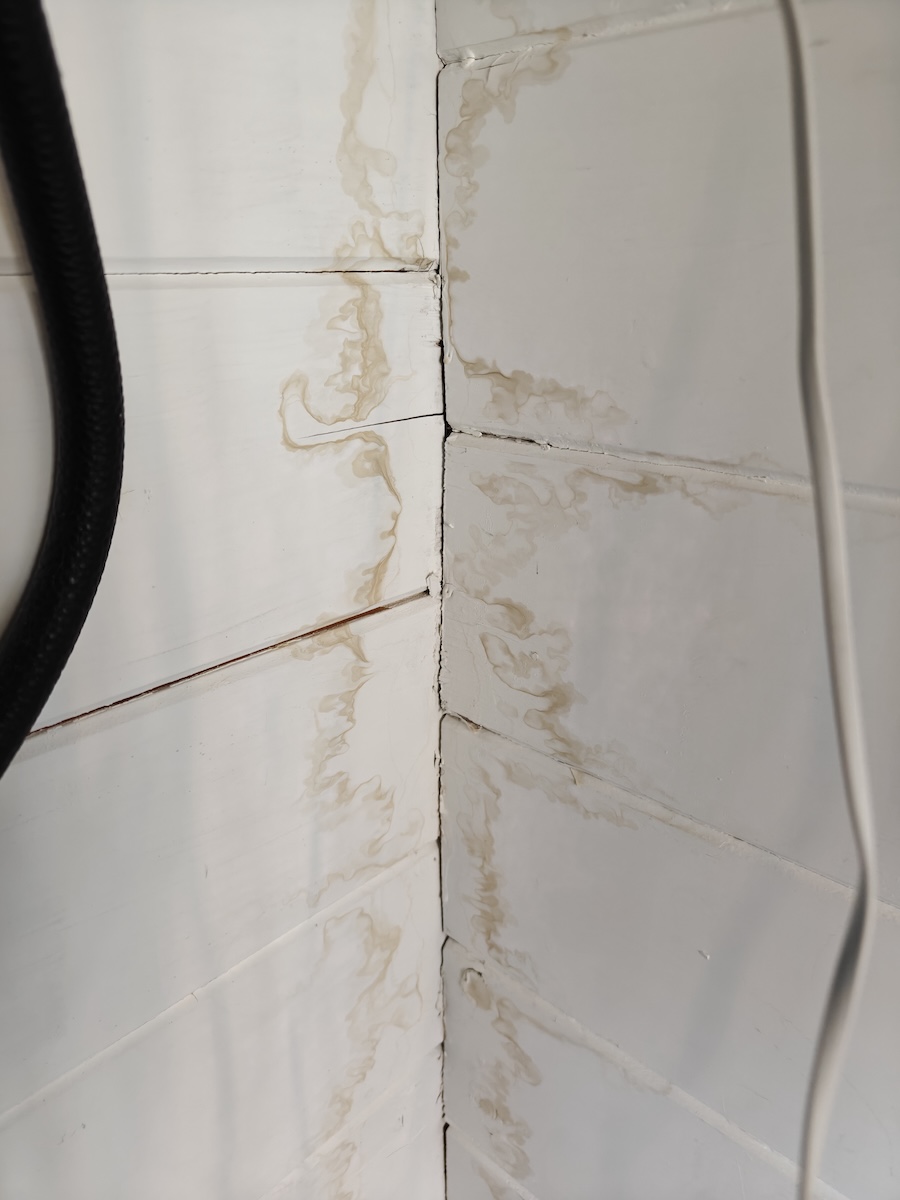
That's not to say that the cabin is as good as the day I put it together. In the corners there is evidence of water having seeped through the joists, as shown by the discolouration of the paint. However, the wood is still sound and doesn't feel wet so I don't think this is anything too serious.
The wooden planks that make up the structure did settle over the first few months when the cabin was first put together, but I think it helped that I couldn't actually get it completed and 'move in' for a few months because the building had essentially settled down by the time I came to use it. I did make sure, however, that even though the building had appeared to settle and wasn't moving anymore, to only fix items internally to one plank. For example, I have several open cupboards fitted to the walls, but they are all hung on hangers that are screwed into only one plank so I don't tie planks together.
So, has it been worth it?
So after 4 years do I think the Log Cabin has been a good investment and worth having?
Well yes I do, without hesitation I would say it's been really worthwhile having the cabin particularly in my circumstances of not having a garage to put a bench in. I would have loved it if it was more usable in the winter, but that's really more to do with the soaring cost of electricity rather than a failure of the log cabin, and even so I have still managed to use it even over the winter when the weather has been reasonably mild.
I'm more than impressed with the way the structure of the building has remained solid and rot free, and the paintwork is only just starting to show its age, so overall yes it's been a good investment.
Here are a couple of views inside the cabin
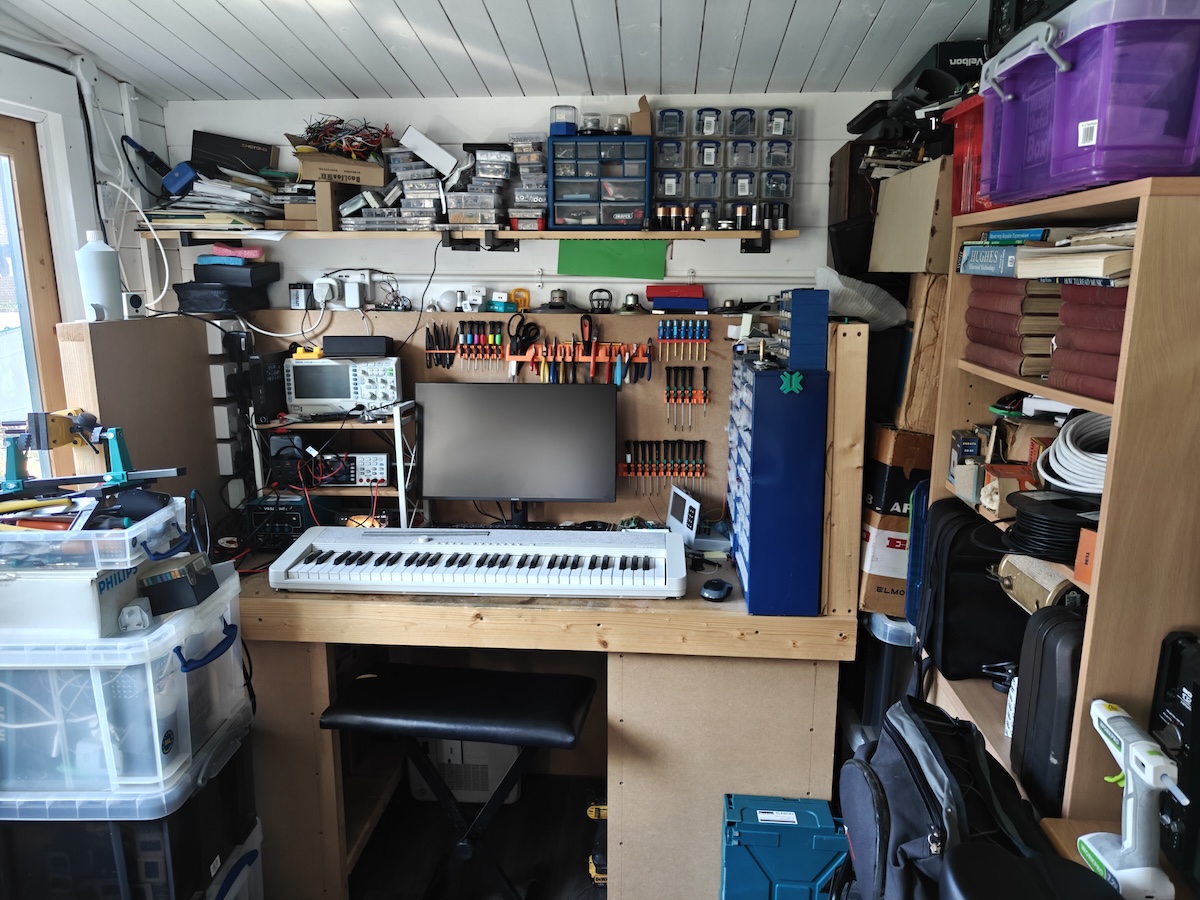
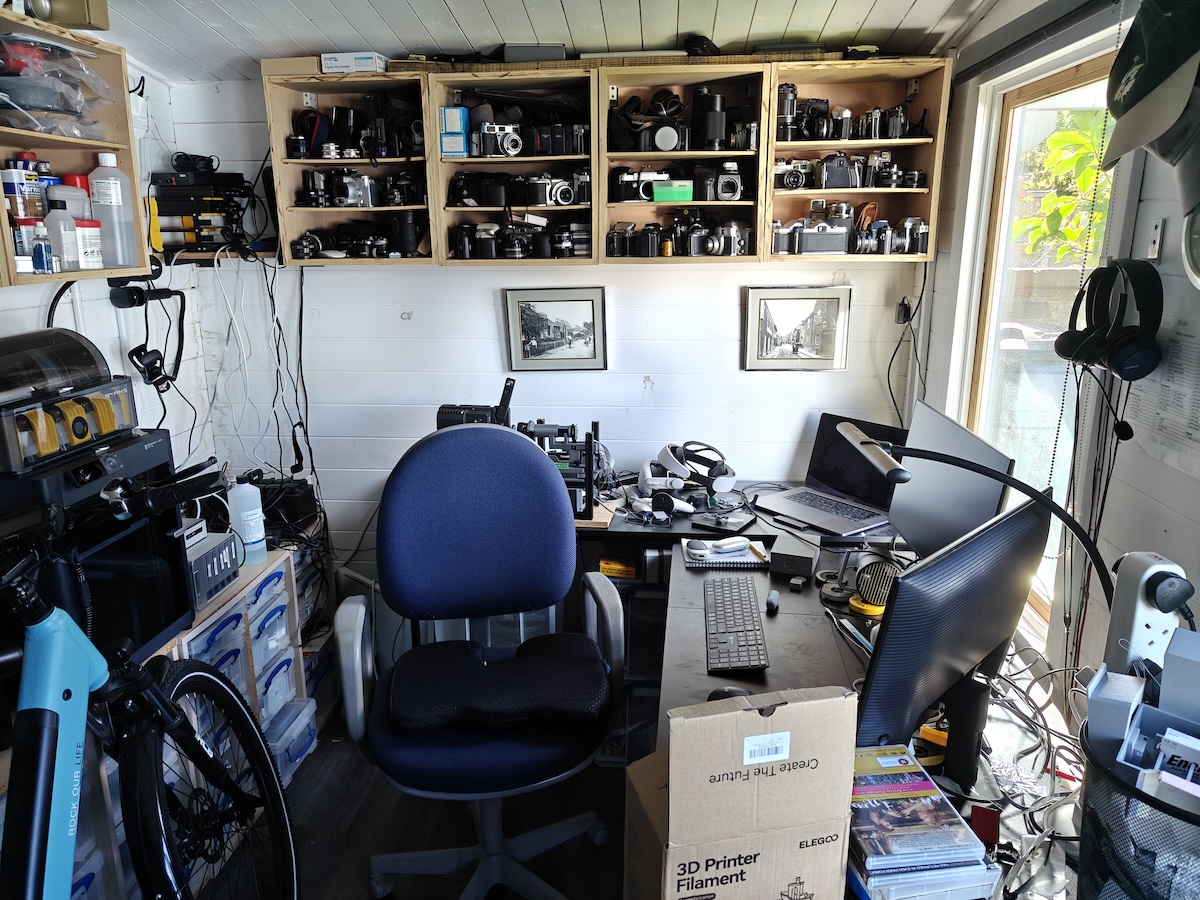
-
Oddly I fitted the reflective film on the outside of the windows not the inside. I did this because I read that if it's fitted on the inside the heat can buildup in the double glazed units and cause problems. ↩
-
I can't say the same for the shed that I constructed on the side of the cabin, which has shown some movement ↩